
LokaGoods
Multi-vendor marketplace · 2026
A marketplace where independent sellers list their own products, and the platform has to hold the money, the stock, and the trust between them.
Business context
Small makers and shops sell through chat apps and social posts, where orders are lost in message threads and buyers have no way to tell a real seller from an invented one. A marketplace solves both, but only if it can moderate what appears on it.
The problem
Marketplace software is usually judged on the shopping experience, which is the easy half. The hard half is everything a buyer never sees: verifying sellers, splitting one payment across several shops, and stopping a listing from going live before anyone has looked at it.
The challenge
Every rule here has an obvious wrong version. Decrementing stock when an order is placed lets unpaid orders hold inventory hostage. Taking the platform fee from the order total instead of each shop’s own lines quietly overcharges whoever shares a basket.
The solution
Stock comes down at payment, not at order creation. A product appears in the catalogue only when it is live and its shop is approved — two separate gates, so a problem seller cannot slip through on a good product. The platform fee is calculated per shop from its own lines and frozen onto the order, so changing the rate tomorrow does not rewrite yesterday.
Design approach
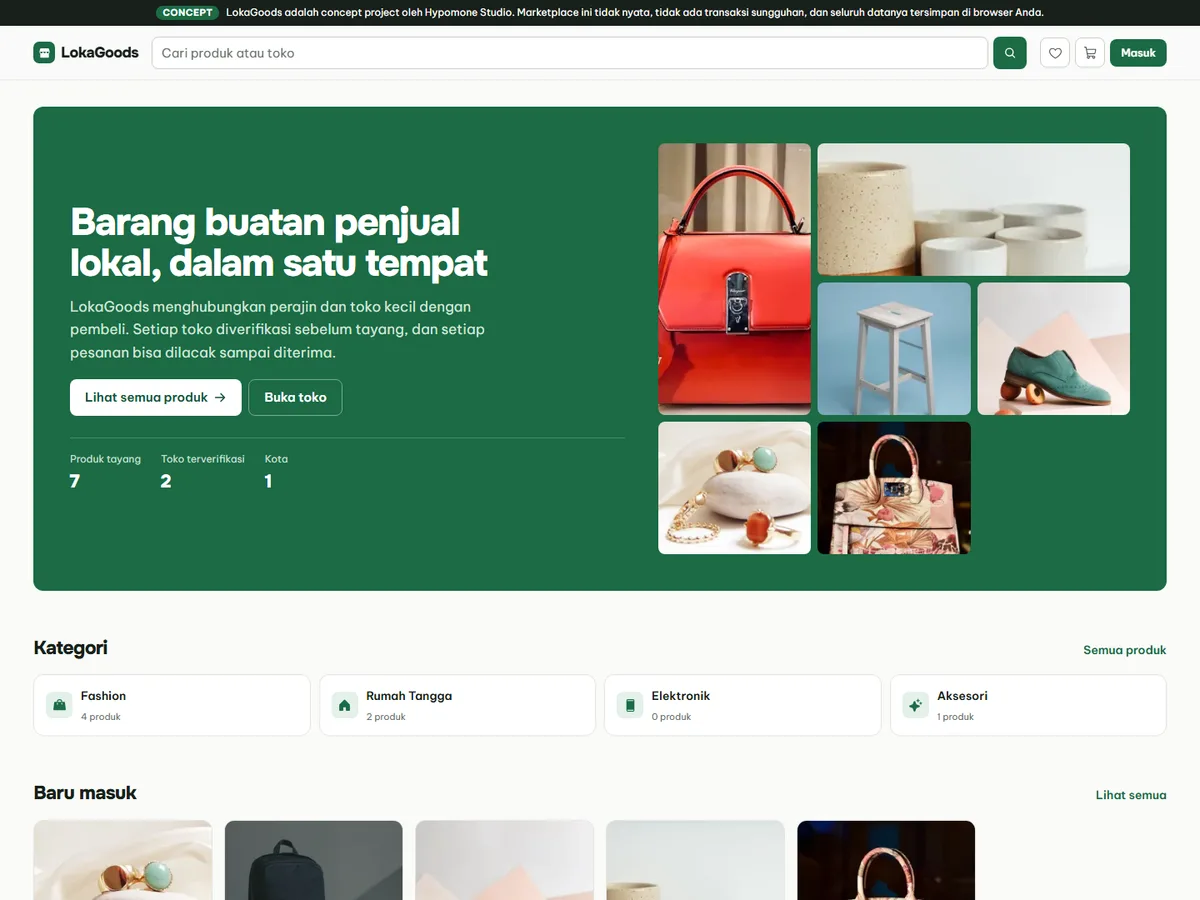
Warm off-white and forest green, chosen partly because no other project in this set uses either. The catalogue leads with photography and keeps the interface quiet around it; the seller and admin panels drop to a denser layout, because those are worked in rather than browsed.
Technical approach
Next.js and TypeScript, with a simulated payment step that is labelled as simulated on the screen where it happens. Real product photography was used, and branded goods were deliberately excluded: a real Nike shoe under an invented seller name reads as a counterfeit listing, which is not the impression a marketplace should leave.
Key features
- Three roles — buyer, seller, admin — with a separate panel each
- Cart that groups by shop, and one checkout across all of them
- Seller registration that creates a shop immediately but holds it for admin approval
- Product moderation queue, with an edited live listing sent back for review
- Reviews restricted to buyers who actually ordered the product and marked it received
- Seller earnings reported net of the platform fee, calculated from that seller’s lines only
- Admin ledger reconciling order value, platform revenue, and what is owed to each shop
Yours is the one we want to build.
Each of these was shaped around what one business actually needed. Yours would start the same way — with a conversation about the business, not a brief.